Pregnancies, intentions, and fertility behaviors during use of the Creighton Model FertilityCare System after initial intention to avoid pregnancy: Results from the Creighton Model effectiveness, intentions, behaviors assessment study
Shahpar Najmabadi, Chun-Pin Esther Chang, Kathy M. Rivet
Daniel Opoku Agyemang , Chun-Pin Chang, Christina A Porucznik, Joseph B Stanford
Department of Family and Preventive Medicine, Office of Cooperative Reproductive Health, Division of Public Health, Spencer Fox Eccles School of Medicine, University of Utah, Salt Lake City, United...
Division of Public Health, Department of Family and Preventive Medicine, University of Utah School of Medicine, and Huntsman Cancer Institute, Salt Lake City, UT, United States of America.
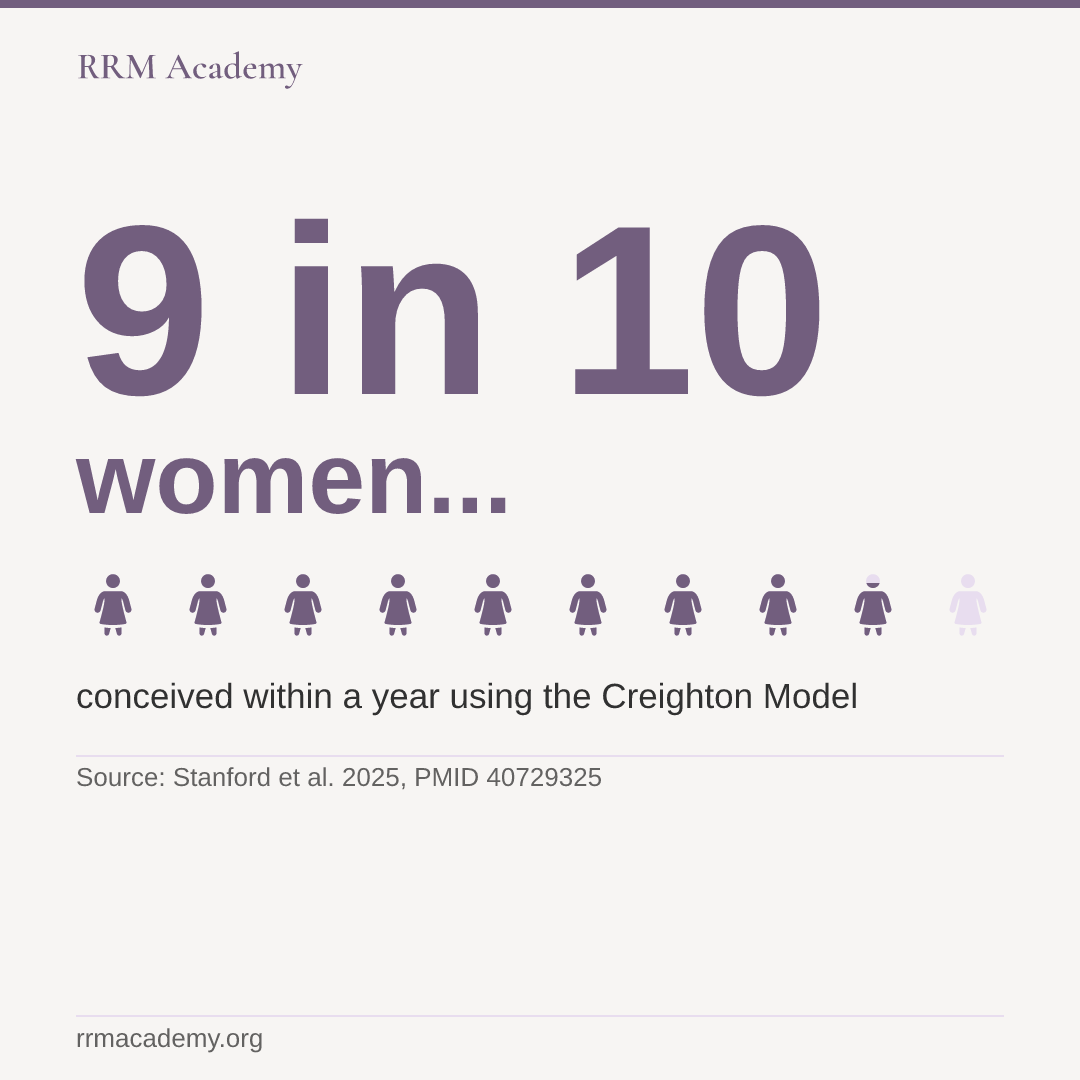
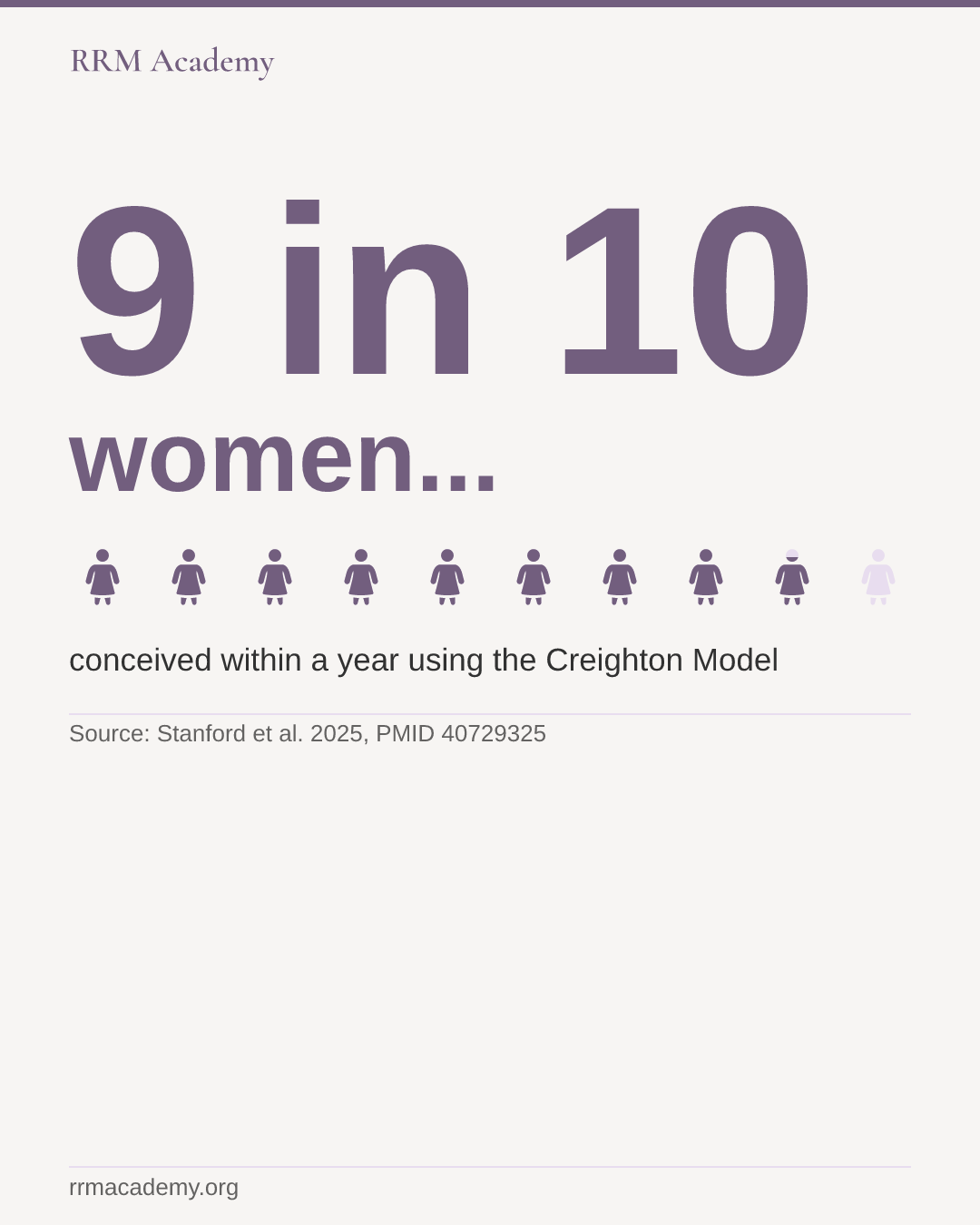
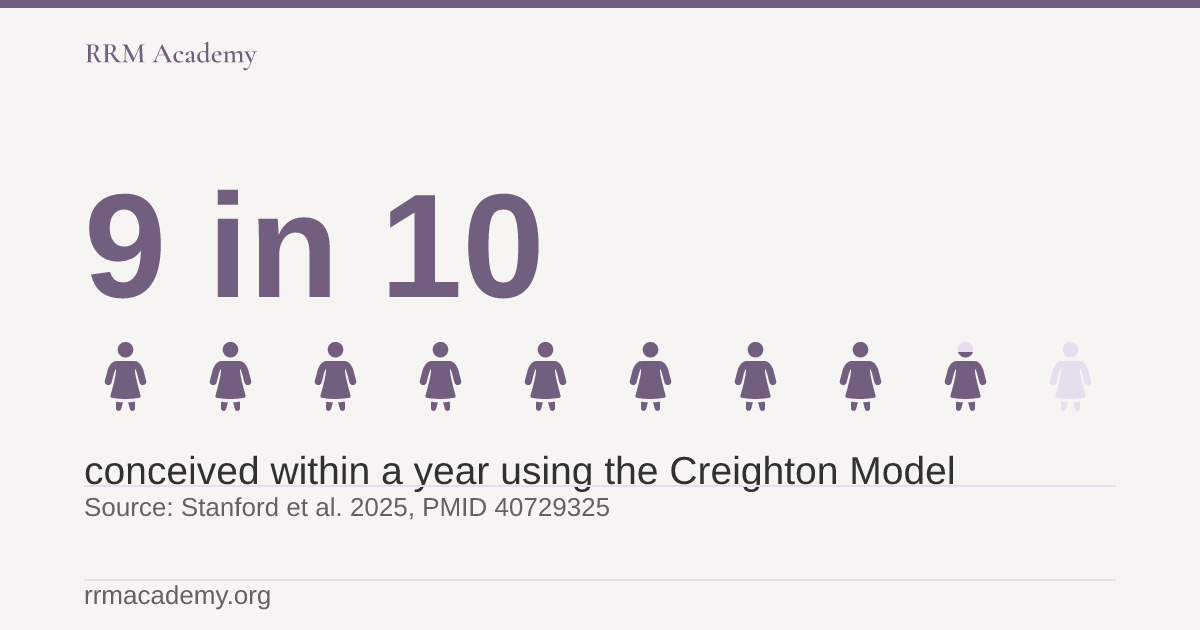
88% of Creighton Model Users Got Pregnant Within 13 Cycles
Nearly 9 in 10 couples who used Creighton Model charting and then tried to conceive got pregnant within about a year. This study tracked 296 couples across 17 centers in the US and Canada, putting the cumulative 13-cycle pregnancy rate at 88%.
88% to 89.8% of couples got pregnant within 13 cycles (about one year) once they were actively trying to conceive.
Couples started out using the Creighton Model to avoid pregnancy, then switched to trying to conceive. These were experienced cycle-readers.
When couples were trying to avoid pregnancy, 44% of those cycles still included intercourse on fertile or potentially fertile days. The method works when it is followed.
Partners agreed on their intention, trying to conceive or trying to avoid, 91% of the time. Couple communication was strong in this group.
The study followed 2,894 cycles across 17 centers in both the US and Canada, making it a multi-site finding rather than a single-clinic result.
Clinical Implications
These results come from couples who already knew their cycles well. They had charted with the Creighton Model before switching to trying to conceive. Couples who understand their own fertility signs are not flying blind when they decide to start trying. The 88% figure reflects what happens when a couple brings real cycle knowledge to the process.
Study Notes
Stanford and colleagues followed 296 couples for up to one year across 17 clinics in the US and Canada, collecting data on 2,894 cycles. Couples reported their intention each cycle: trying to conceive, trying to avoid, or undecided. The researchers tracked pregnancy outcomes for each group.
RRM Context
The Creighton Model is a standardized method of cycle charting built around biomarkers, primarily cervical mucus observations, that identify fertile and infertile days. It sits within the broader field of restorative reproductive medicine, where knowing what the cycle is actually doing is the starting point for care. A couple who has been charting knows when they are most fertile, what a typical cycle looks like, and whether anything looks off. That body literacy is the foundation restorative clinicians build from.
Our editorial summary of this paper, not the article's abstract.
Abstract
Background
Knowledge of the fertile and infertile phases of the menstrual cycle can be applied to conceive or to avoid pregnancy. Fertility intentions and sexual behaviors during the fertile time may influence whether and when pregnancy occurs. The Creighton Model FertilityCare System (CrMS) is a specific system of fertility appreciation used to conceive or to avoid pregnancy. The objective of this paper is to report intentions, behaviors, and pregnancy rates during use of the CrMS among couples who initially intended to avoid pregnancy.Data and methodsWe analyzed a prospective cohort study conducted in 17 CrMS centers across the USA and Canada, following 296 couples for up to one year after onset of initial use of the CrMS to avoid pregnancy. Baseline data included demographics, motivations, and pregnancy intentions for each partner. Couples contributed 2894 menstrual cycles, most of which had data collected (by questionnaires and daily diary) on cycle-specific pregnancy intentions, days of potential fertility, and fertility behaviors. Pregnancies were prospectively actively ascertained.
Results
We found a high concordance (91%) in cycle pregnancy intentions between partners. However, 44% of cycles with strong intentions to avoid pregnancy included intercourse on potentially fertile days or days of undetermined fertility status. Across all sensitivity scenarios, cumulative 13-cycle pregnancy rates with cycle intention to conceive ranged from 88.0% to 89.8%, and cumulative 13-cycle pregnancy rates with cycle intention to avoid ranged from 29.1% to 35.3%. In multivariate analysis, baseline motivations and intentions for pregnancy within 2 years were strongly correlated with the likelihood of pregnancy, more so than cycle intentions.
Conclusion
The findings suggest that in some populations using natural family planning, baseline motivations and intentions may be more strongly related to pregnancy rates than cycle intentions. Our findings also highlight essential elements for evaluating correct use, including complete recording of intercourse and its timing.
Creighton Model FertilityCare System pregnancy avoidance, fertility intentions behaviors natural family planning, Stanford Najmabadi Creighton Model effectiveness study, CEIBA study Creighton Model prospective cohort, pregnancy rate intention avoid Creighton Model, cervical mucus monitoring fertility awareness method, cycle-specific pregnancy intentions partner concordance, natural family planning effectiveness real-world data, fertile day intercourse unintended pregnancy NFP, baseline motivation pregnancy prediction CrMS
PMID 40729325 40729325 DOI 10.1371/journal.pone.0328806 10.1371/journal.pone.0328806
Cite this article
Stanford, J. B., Najmabadi, S., Chang, C. P. E., Agyemang, D. O., Rivet, K., & Porucznik, C. A. (2025). Pregnancies, intentions, and fertility behaviors during use of the Creighton Model FertilityCare System after initial intention to avoid pregnancy: Results from the Creighton Model effectiveness, intentions, behaviors assessment study. PloS one, 20(7), e0328806. https://doi.org/10.1371/journal.pone.0328806
Stanford JB, Najmabadi S, Chang CPE, Agyemang DO, Rivet K, Porucznik CA. Pregnancies, intentions, and fertility behaviors during use of the Creighton Model FertilityCare System after initial intention to avoid pregnancy: Results from the Creighton Model effectiveness, intentions, behaviors assessment study. PLoS One. 2025;20(7):e0328806. doi:10.1371/journal.pone.0328806
Stanford, J. B., et al. "Pregnancies, intentions, and fertility behaviors during use of the Creighton Model FertilityCare System after initial intention to avoid pregnancy: Results from the Creighton Model effectiveness, intentions, behaviors assessment study." PloS one, vol. 20, no. 7, 2025, pp. e0328806.
Related articles
NaProTECHNOLOGYCulture of LifeResponsible ParenthoodCreighton Model System
Open Access
NaProTECHNOLOGY is a new field of medicine specializing in the promotion of human procreation. Its foundation is a teaching system called the Creighton Model Fertility Care System. It is based on the ability to observe and record biological biomarkers, enabling spouses to recognize and understand the naturally occurring cycle of fertility and infertility. The spouses can use their acquired knowledge both for achiving pregnancy and avoiding pregnancy. The system also enables them to broaden their knowledge to better understand sexuality and deepen their mutual love. It also plays an important role in diagnosing and treating reproductive health according to the natural cycle of women. NaProTECHNOLOGY is involved in building a "new culture of life" through integral concern for human fertility by restoring natural procreation and respecting the principles of responsible parenthood.
NaProTECHNOLOGYClinical OutcomesLive Birth RatesGeneral Practice Setting
We evaluated outcomes in couples treated for infertility with natural procreative technology (NaProTechnology [corrected] NPT), a systematic medical approach for optimizing physiologic conditions for conception in vivo, from an Irish general practice. All couples receiving treatment from 2 NPT-trained family physicians between February 1998 and January 2002 were studied. The main outcome was live birth, and secondary outcomes included conceptions and multiple births. Crude proportions and adjusted life-table proportions were calculated per 100 couples. A total of 1239 couples had an initial consult for NPT, of which 1072 had been trying for at least a year to conceive and initiated treatment. The average female age was 35.8 years, the mean duration of attempting to conceive was 5.6 years, 24% had a prior birth, and 33% had previously attempted treatment with assisted reproductive technology (ART). All couples were taught to identify the fertile days of the menstrual cycle with the Creighton Model FertilityCare System, and most received additional medical treatment, including clomiphene (75%). In life-table analysis, the cumulative proportion of first live births for those completing up to 24 months of NPT treatment was 52.8 per 100 couples. The crude proportion was 25.5. Younger couples and couples without previous ART attempts had higher rates of live birth. Among live births, there were 4.6% twin births. NPT provided by trained general practitioners had live birth rates comparable to cohort studies of more invasive treatments, including ART. Further studies are warranted to compare NPT directly to other treatments.
NaProTECHNOLOGYCore CurriculumCreighton Model SystemPractitioner Training